Meet Your Teacher:
Ms. Ishita Parikh
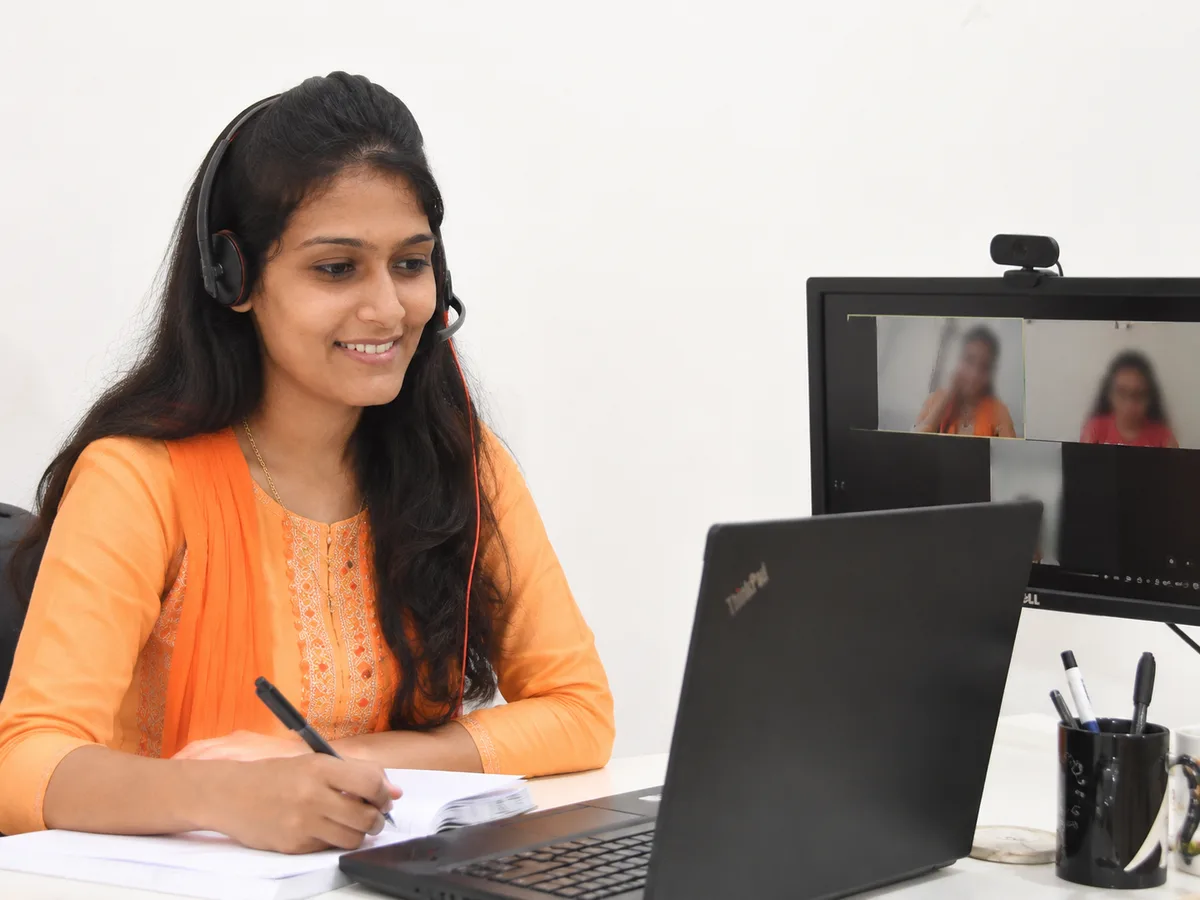
Ms. Ishita Parikh teaches Hindi, Sanskrit and Vedic Maths, with over 8 years of teaching experience and 500+ students taught, five years in Mumbai school classrooms and online ever since, with online learners in India, Malaysia, Singapore and the USA, and in earlier years from Germany, Ireland and Canada.
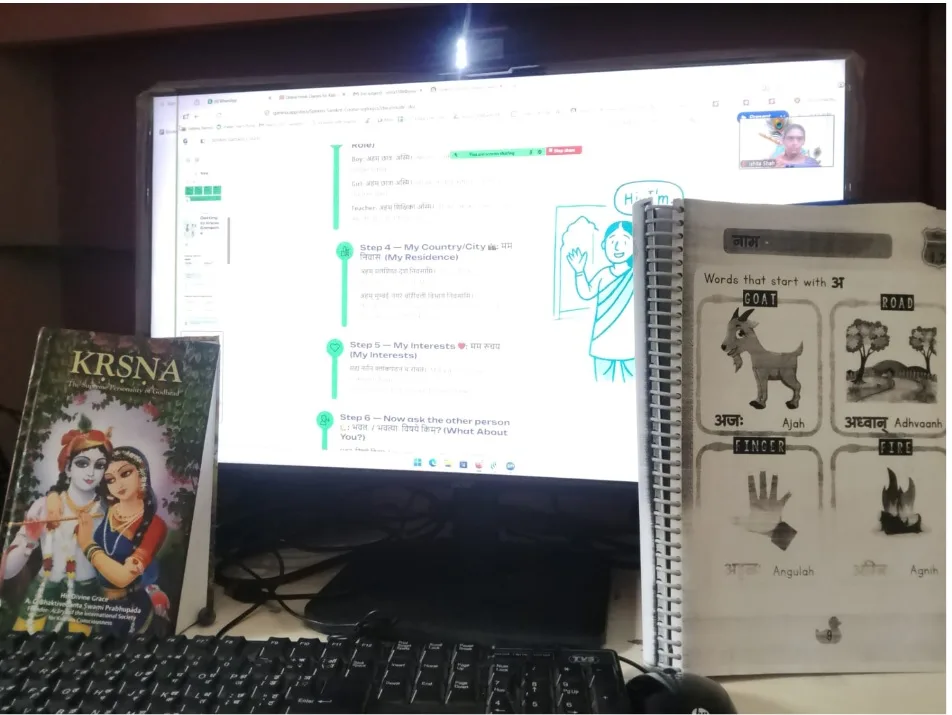
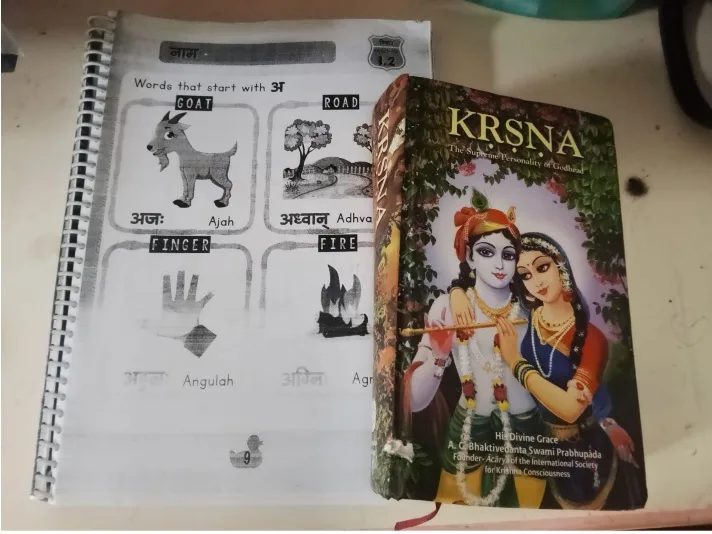
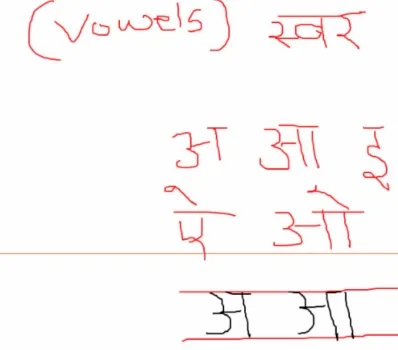
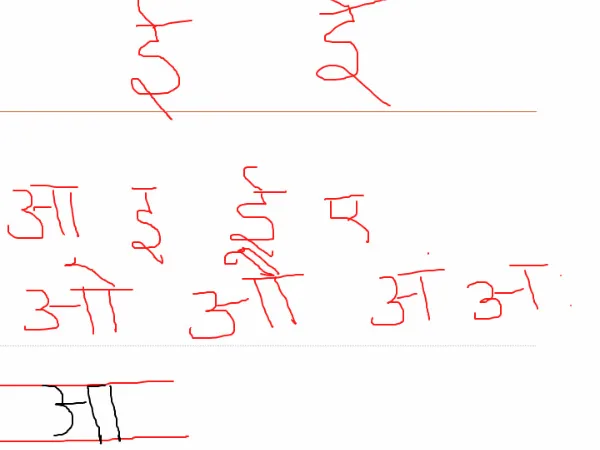
Her Hindi teaching runs well beyond her own classes: a year teaching Hindi for an online school, Hindi for children of Indian families in Singapore, and current work on Vedantu's Phoenix programme teaching letter sounds and pronunciation in English and Hindi, much of it to learners with no Indian background. She has taught Hindi for CBSE, ICSE, Cambridge IGCSE and the IB.
She is a trained teacher as well as a subject specialist. Alongside her Master's degree in Sanskrit, she holds two one-year teaching diplomas, one passed with Distinction, and taught in Mumbai schools before moving online.
She has taught Hindi for CBSE, ICSE, Cambridge IGCSE and the IB, including IB Diploma Hindi A, Hindi B and ab initio at both Standard and Higher Level. Because Hindi grammar descends from Sanskrit, her Sanskrit training is what lets her explain the rules rather than ask students to memorise them.
Growing up fascinated by Indian culture, ancient history, and Sanskrit literature, she dedicated herself to making this classical language accessible to modern learners worldwide, through engaging, structured, and student-friendly online classes.
She also works as a Sanskrit translator on a machine-learning research project, turning classical manuscripts into precise English, work where an approximate reading is not good enough. It keeps her Sanskrit sharp well beyond the classroom.
Qualifications & Credentials
📖 Master of Arts (Acharya) in Sanskrit, 2023, Central Sanskrit University (CSU), under the Ministry of Education, Govt. Of India. Two-year postgraduate degree, July 2021 – November 2023, specialising in one śāstra with four additional subjects
🎓 Diploma in Sanskrit Language (three years), University of Mumbai, 2019–2021. Included Basic and Intermediate Spoken Sanskrit
📚 Bachelor of Arts, Sociology, University of Mumbai, 2007
🏛️ Spoken Sanskrit & Advanced Sanskrit, “Elite” grade, 72%, NPTEL / SWAYAM, IIT Kharagpur (Ministry of Education, Govt. Of India). A 12-week proctored course in which only 77 candidates were certified nationwide. Roll No. NPTEL21HS03S14020668: verify this certificate 👩🏫 Diploma in Pre-Primary Teachers' Training, Grade A+, Distinction (76.5%), Vidhyanidhi Education Society, Mumbai, 2019. One year, English medium. 459 of 600 marks, covering child psychology, methods of teaching children, child health, and principles of child education. Govt. Reg. No. MAH/1291 G.B.B.S.D. F-27331
🧒 Diploma in Early Childhood Care and Education, Grade A, First Class (73.83%), Vidhyanidhi Education Society, Mumbai, 2019. One year, English medium. 443 of 600 marks, including an assessed school practicum
🔢 International Vedic Maths Teachers' Training Programme, Grade A, Indian Institute of Vedic Maths & Abacus (Skill India / NSDC approved training partner), 2025. Six months, covering all 16 sutras. Certificate No. SDP1701000004429
🕉️ Bhagavad Gītā Course, ISKCON Kurukshetra, 2024
🗣️ Saṁskṛta Sambhāṣaṇam Shibir, 2021, grammar applied to literature, reading nyāya-śāstra passages, and speaking Sanskrit in discussion. Also Sanskrit Language Programme, Sanskrit Shiksha Bharti, 2022
📜 Sanskrit Translator (NLP research), Trade Vectors LLP, since 2022. Translating classical Sanskrit manuscripts into structured English for a machine-learning project, including Pañcāṅga date calculations and classical writing on weather
Teaching Experience
Ms. Parikh has taught in Mumbai schools since 2018, five years in classrooms, at Vibgyor and Swami Vivekanand and part-time at others including Shikha Academy. The roles below are the main ones rather than an exhaustive list. She carried on teaching in schools after moving online, fitting the first online batches into weekends and free periods, which is why the dates overlap.
Founder and Teacher: Sanskrit Shiksha
April 2022 – present · online
Teaches school students, university students and adult learners across time zones. Wrote all five courses herself, Sanskrit Foundations (36 hours), Sanskrit Grammar and Shlokas (42 hours), Classical Sanskrit Reading, Conversational Sanskrit, and Introduction to Vedic Maths (24 hours), each with its own lesson plans, exercises and assessments.
Pronunciation Teacher, Phoenix Programme: Vedantu
June 2026 – present · online
Teaches letter sounds and pronunciation, in both English and Hindi, much of the Hindi work with learners who have no Indian background, and who need to hear the sounds English simply does not have before they can produce them.
Hindi Teacher, NRI families in Singapore
May 2026 – present · online
Teaches Hindi to children of Indian families living in Singapore, the children who hear Hindi at home every day and have never been taught to read it. Exactly the situation the Hindi course for children was built around.
Hindi Teacher: Real School
2022 – 2023 · one year, online
A full year teaching Hindi remotely for an online school, live lessons delivered to their students, to their timetable and their curriculum.
Primary School Teacher: Swami Vivekanand Group of Schools
January 2019 – March 2020 · Kandivali West, Mumbai
Taught primary classes, planned lessons with senior teachers, and gave extra one-to-one help to children falling behind.
Assistant Teacher, Kindergarten: Vibgyor Group of Schools
January 2018 – August 2019 · Borivali, Mumbai
Ran daily lessons and activities for young children, marked work and gave feedback, and planned age-appropriate activities with the teaching team.
Teaching Internship: Divineland Pre-Primary School
October 2018 · Mumbai
The assessed practical training for her Early Childhood Care and Education diploma, curriculum planning, classroom observation and reports, and teaching with teaching aids.
Languages
| Sanskrit | Teaches at Master's (Acharya) level; NPTEL Elite in spoken Sanskrit |
| Hindi | First language |
| English | Fluent (C2): the language she teaches international students in |
| Gujarati | First language |