
IGCSE and IB Hindi Tuition

Cambridge IGCSE · IB MYP · IB Diploma: Hindi A, Hindi B and ab initio, SL and HL.

Qualified Hindi teaching for international curricula is scarce. Most families find either a general Hindi tutor who has never seen an IB rubric, or an agency whose Hindi specialist is a rotating name. This is neither.

Ms. Parikh has taught Hindi for Cambridge IGCSE and for the IB, including Diploma Hindi A, Hindi B and ab initio at both levels, and teaches to the criteria the examiner marks against.

Hindi textbooks and notes for IB and IGCSE students

Which course your child is on

International curricula come with shorthand. Find your child's row; the teaching below follows from it.

CourseWho it suitsLevels
Cambridge IGCSE HindiGrades 9 and 10 in a Cambridge schoolCore or Extended
IB MYP HindiGrades 6 to 10 in an IB schoolPhases 1 to 6
IB DP Hindi ab initioComplete beginners. Ab initio is Latin for "from the start"SL only
IB DP Hindi BStudents with some Hindi already. The usual course for a child who speaks Hindi at home but has not studied it formallySL or HL
IB DP Hindi A: Language and LiteratureHindi as the student's best language, studied as literatureSL or HL
School-Supported Self-TaughtStudents whose school does not teach Hindi, preparing the literature course largely alone. The hardest position in the range, and the one where outside teaching changes mostHindi A SL

SL and HL, plainly

Every Diploma student takes six subjects, three at Higher Level and three at Standard Level. The IB sets SL at about 150 teaching hours and HL at about 240 across the two-year Diploma; in Hindi B, HL adds two literary works and a literature-based oral. Whether Hindi is one of the three HLs depends on what your child wants to study afterwards, not on how good their Hindi is.

Why good Hindi loses IB marks

In these curricula content knowledge is not enough. The IB marks against published criteria, and a student who writes a good essay that does not address them is marked down for reasons nobody has explained. Most of the work here is teaching the student to read the rubric as the examiner does.

Taught to the criteria

From the first session the student learns what each band descriptor asks for. Model answers at each band, so the difference between a 5 and a 7 is visible rather than described.

Marked like an examiner

Every piece of written work comes back band by band, with the reason for each judgement and the specific gap to the next band. Past papers under exam conditions, with script review afterwards.

The oral, rehearsed and recorded

The Individual Oral is where well-prepared students most often underperform, because they have never heard themselves. Here it is practised, recorded and reviewed together, every fortnight.

Grammar is explained from its source. An MA in Sanskrit, which is where Hindi grammar comes from, means accuracy at HL is built on understanding rather than recall.

What the teaching covers

Every programme begins with a diagnostic against the current mark scheme, usually a past paper or a recent piece of school coursework, marked as an examiner would mark it. The plan is built from that; these are the frameworks.
Cambridge IGCSE

  • Paper structure and where the marks sit
  • Reading comprehension: locating, inferring, answering in the required form
  • Directed writing: format, register, audience for each task type
  • Composition: narrative and discursive, planned under time
  • Grammar and accuracy: the student's own error patterns
  • Past papers, timed, five at minimum

IB Hindi ab initio and Hindi B

  • The five themes: identities, experiences, human ingenuity, social organisation, sharing the planet
  • Text types and their conventions: blog, article, letter, brochure, speech, interview, report
  • Paper 1: one text type to purpose, audience and context
  • Paper 2: listening and reading comprehension
  • Individual Oral: visual stimulus at SL; at HL, an extract from a studied work
  • HL literature: the two prescribed works, in depth

IB Hindi A, and self-taught

  • The prescribed literary works, read closely with the areas of exploration
  • Non-literary texts: advertising, journalism, speeches, digital text
  • The Learner Portfolio, built week by week rather than in a panic at the end
  • Individual Oral: the global issue, extract selection, structure, delivery
  • Paper 1 guided analysis; Paper 2 comparative essay
  • HL Essay: a line of inquiry, 1,200 to 1,500 words

If your child's school does not offer Hindi

Most IB schools do not. The route is School-Supported Self-Taught: the school registers and supervises the candidate for Hindi A at Standard Level, but does not provide the teacher. The family does. Many schools ask to see the tutor's qualifications first, and some will not authorise the subject until a suitable tutor is named.

Your child is being asked to prepare a literature course with almost no teaching. That is the hardest position in the whole IB Hindi range, and exactly what this is for.

  • ✅ One-to-one sessions built around the IB assessment calendar; for self-taught students this is effectively required
  • ✅ Work on the prescribed literary texts, the Learner Portfolio and the oral, not general conversation
  • ✅ Qualifications and teaching background supplied for the school's records
  • ✅ Happy to speak with the school's IB or language coordinator directly
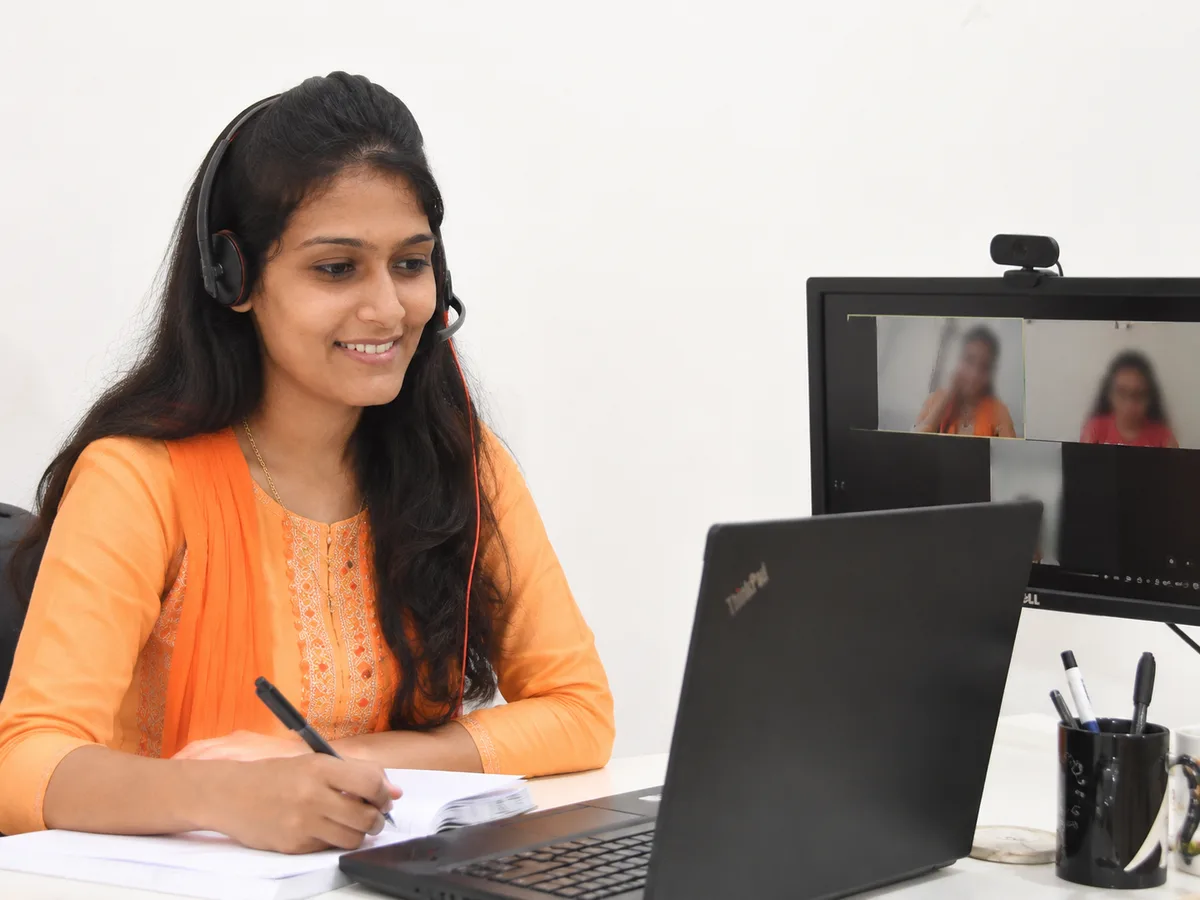
Ms. Ishita Parikh teaching Hindi online

One named teacher, every class

Ms. Ishita Parikh has taught Hindi for CBSE, ICSE, Cambridge IGCSE and the IB, including Diploma Hindi A, Hindi B and ab initio at Standard and Higher Level. She holds an MA in Sanskrit from the Central Sanskrit University, the NPTEL Elite grade in spoken Sanskrit from IIT Kharagpur, one of 77 certified nationwide with a roll number you can check, and two teacher-training diplomas. Five years in Mumbai classrooms, and more than 500 students taught since 2018, across those classrooms and online.

Classes are live on Zoho Meeting and taught by her, never an assistant. School tuition is not recorded; if a session is missed, a compensation class is arranged. Coordination with the school's own teacher where the family wants it.

Full credentials and teaching history →

How progress is measured

Small batches mean every student's work is actually seen. Nothing here is automated. Ms. Parikh marks it herself.

Nothing here is a surprise on results day. This is how progress is measured, and how often.

What How often What it checks
Diagnostic Session 1 Current band against the real criteria, from a past paper or recent school coursework
Written task Weekly Marked to the band descriptors, with the gap to the next band named
Oral practice Fortnightly, recorded Fluency, structure, response to questions
Text-type test Per text type Conventions, register, audience
Full past paper Monthly in the exam year Timing and total score
Mock examination Twice in the final year Full conditions, full script review
Progress report Monthly Written, with the predicted-grade trajectory

What you receive: criteria-mapped notes for every assessed component, model answers at each band, text-type conventions sheets, notes on the prescribed works for HL and Hindi A, an Individual Oral preparation pack, Learner Portfolio templates, past papers with mark schemes and examiner-style commentary, every piece of written work back marked band by band, and recordings of every practised oral.

What it costs

One price for one hour of live teaching. It comes down as the group grows.

Sold in blocks of 12 hours, for as long as it is needed, alongside school

On your own
One to one, built around you
₹729
in India
$27
outside India
per hour
Two or three of you
Learn with friends or family
₹459
in India
$18
outside India
per person, per hour
Best value
A group of four or more
Our small batch, capped at ten
₹349
in India
$16
outside India
per person, per hour
Shaped around you

You pay for the hours you take, one stage at a time, and nothing commits you to the rest. The hours are a guide rather than a fixed track: if one part of the course matters more to you, we spend longer there and move more briskly elsewhere. You can also join at whichever stage matches where you already are.

What you buy Hours On your own Two or three, each Four or more, each
One block of 12 hours
One to one is the usual choice here
12 ₹8,748
$324
₹5,508
$216
₹4,188
$192

That is simply the hours added up, at ₹349 an hour per person in India, or $16 outside India, in a group of four or more.

Your first class is free. A real lesson with Ms. Parikh, not a sales call. Nothing is paid until you have taken it and decided to carry on.

One session is one hour, so the hours above are also the number of classes. There is no second number to work out. Every session is live, and taught by Ms. Parikh herself. Tuition is not recorded, so if a class is missed a compensation class is arranged instead. Worksheets, marked work and a certificate of completion are included. How often you meet is arranged with you, around your timetable and ours. Individual IB tutors commonly charge several times this. A group here is ₹349 in India or $16 outside India, per person, per hour. Two or three classes a week in the exam term or for self-taught students; how often you meet is arranged with you.

Questions parents ask

Ab initio is for complete beginners and exists at Standard Level only. Hindi B is for students who already have some Hindi, the usual choice for heritage students, at SL or HL. Hindi A treats Hindi as the student's best language and studies it as literature, at SL or HL.

School-Supported Self-Taught Hindi A at Standard Level. The school registers the candidate but does not teach the course, so the family arranges the teaching. It is demanding, and it is the situation where outside support matters most.

That usually depends on what they want to study at university, not on their Hindi. HL adds two literary works and a literature-based Individual Oral. If Hindi is a strength and they want the points, HL is worth it, but three HLs is the limit and the choice competes with their other subjects.

Ms. Parikh has taught Hindi for Cambridge IGCSE and for the IB, including Diploma Hindi A, Hindi B and ab initio at both Standard and Higher Level.

For the Diploma, the beginning of DP1 is ideal: the Learner Portfolio and the oral both reward work spread over the two years. Starting in DP2 is common and still effective, but the plan shifts sharply towards the assessed components.

Yes, and it is a priority. It is rehearsed, recorded and reviewed, because most students have never heard themselves speak and are surprised by what they hear.

Yes, where the family wants it. Knowing what the school has already covered avoids duplicating it, and qualifications can be supplied for the school's records.

For IGCSE and MYP a group works well. For DP Hindi A and for self-taught students, one-to-one is strongly recommended: the work is too individual for a shared timetable.

Further reading

IB Hindi B: How the Assessment Actually Works

IB Hindi B is not harder Hindi.

Teaching Hindi to Children Growing Up Abroad: What Actually Works

Your child understands every word and answers in English.

Hindi Gender: Why Every Noun Is Masculine or Feminine

A chair is feminine, a room is masculine, and no rule fully explains it.

School Hindi for CBSE, ICSE and the state boards

The Indian-board page, for families comparing the two.

Start with a free class, and bring marked work

A free session, live, at no cost. Bring a recent piece of marked school work or a past-paper attempt: a real diagnostic against the actual criteria is worth more than any conversation about approach. Nothing is paid until after it.