Hindi Classes for Children

Live online classes for children aged 5 to 14, so your child can talk to their grandparents, not just hear them.

Small batches of eight. Two classes a week, an hour each. Taught by Ms. Ishita Parikh, who trained as a schoolteacher before she taught a single child online.

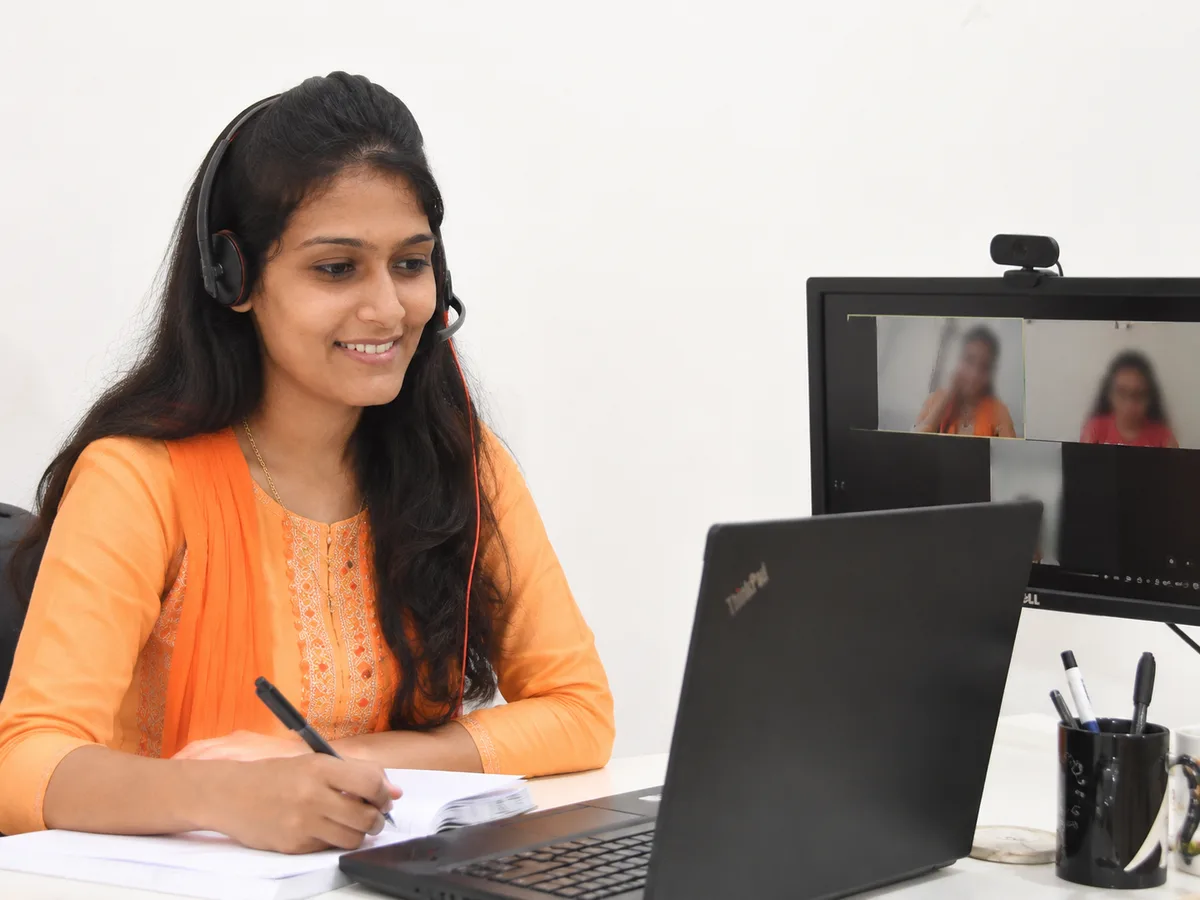
A child in a live online Hindi class for kids, reading Devanagari aloud

"She understands everything. She just can't read a word."

If that sounds like your child, you are in the majority, not the exception.

Most children growing up outside India pick up Hindi by ear. They follow conversations at home, they understand their grandparents perfectly well, and then somewhere around seven or eight the reading and writing never quite arrives. Ordinary beginner classes insult them by starting at "this is the word for water". Ordinary intermediate classes leave them behind on day one.

So we don't put them in either. Children who already speak some Hindi start at the script, and skip the lessons on words they have known since they were three.

This is right for your child if…

  • ✅ They understand Hindi at home but can't read or write it
  • ✅ They're starting from nothing, with or without an Indian background
  • ✅ You'd like them to talk properly with grandparents and family
  • ✅ They're at an international school offering Hindi as a language
  • ✅ You live in India but Hindi isn't the language spoken at home

You probably want something else if…

  • ➡️ Your child needs marks in a school Hindi exam. That's syllabus tuition, taught separately
  • ➡️ You're an adult learning for yourself, private sessions suit you better
  • ➡️ You want a recorded course to work through alone, every class here is live
  • ➡️ You want an app your child uses on their own. This is a real class, with a real teacher, at a fixed time

We'd rather say this now than take your money and disappoint you.

Looking for Sanskrit classes for children instead? Those run separately: many families take both, and the second subject’s sessions are 15% off.

Three stages, by age and by what they can already do

Children aren't small adults, so they don't get an adult syllabus made shorter. Each stage is built for how children of that age actually learn.

शिशु · Shishu

Ages 5 to 7
🎵
  • Learning by ear first: no writing pressure at all
  • Rhymes, songs and picture stories
  • Sounds of the alphabet, recognising letters
  • Words for family, food, colours, animals

By the end: understands and answers simple questions, recognises the letters.

बाल · Bal

Ages 8 to 10
✏️
  • Reading and writing Devanagari properly
  • Matras: the vowel signs that unlock everything
  • Building sentences, asking and answering
  • Short stories read aloud together

By the end: reads a simple story aloud and writes a few sentences unaided.

किशोर · Kishor

Ages 11 to 14
💬
  • Real conversation: opinions, not just answers
  • Past, present and future properly handled
  • Reading longer passages and writing paragraphs
  • Messaging family in Hindi, typing in Devanagari

By the end: holds a proper conversation and writes a letter or a message home.

Not sure which stage fits? That's what the free demo is for, it includes a short placement chat, and we'll tell you honestly where your child should start, even if that's nowhere at all yet.

Ms. Ishita Parikh teaching a live online class, with students visible on screen

Taught by someone trained to teach children

Plenty of people speak Hindi. Far fewer have been trained in how children actually learn, and with a class of eight seven-year-olds on a Saturday morning, that training is the whole difference.

Ms. Ishita Parikh taught in Mumbai schools before she moved online, and holds two full one-year teaching diplomas covering child psychology, early-years methods and classroom practice.

👩‍🏫 Diploma in Pre-Primary Teachers' Training, Grade A+, Distinction (76.5%)
Vidhyanidhi Education Society, Mumbai
🧒 Diploma in Early Childhood Care and Education, Grade A, First Class
Vidhyanidhi Education Society, Mumbai
🏫 Classroom teaching experience
Vibgyor Group of Schools and Swami Vivekanand Group of Schools, Mumbai
📖 MA (Acharya) in Sanskrit
Central Sanskrit University, which is why Hindi grammar gets explained, not just drilled

How the classes run

🗓️

Weekends, your time

Batches run on Saturday mornings in your own time zone, not India's. Typically Saturday morning on the US East Coast, and Saturday morning in the UK.

👧

Eight children, maximum

Small enough that every child speaks in every class. A child who never talks never learns to talk.

📹

Every class recorded

Holidays, illness, a clashing birthday party, the recording is always there, so a missed class isn't a lost one.

👩‍🏫

Always the same teacher

Every class is taught by Ms. Parikh herself. No rotating tutors, no assistants, no recordings standing in.

How progress is measured

Small batches mean every student's work is actually seen. Nothing here is automated. Ms. Parikh marks it herself.

There is no exam in this course, and that is deliberate, a five-year-old does not need one. But progress is measured, and parents are told what it is.

What How often What it checks
Speaking check Every class, informally Confidence, pronunciation, willingness to answer
Reading aloud Weekly from Stage 2 Fluency, matras, conjunct letters
Written worksheet Weekly from Stage 2 Spelling, letter formation, grammar
Milestone task End of each module The specific milestone set for that module
Stage review End of each stage Written progress note to parents, with next steps

What it costs

One price for one hour of live teaching. It comes down as the group grows.

3 stages · 88 hours in total, and you can join at any stage

On your own
One to one, built around you
₹399
in India
$15
outside India
per hour
Two or three of you
Learn with friends or family
₹250
in India
$12
outside India
per person, per hour
Best value
A group of four or more
Our small batch, capped at ten
₹190
in India
$9
outside India
per person, per hour
Shaped around you

You pay for the hours you take, one stage at a time, and nothing commits you to the rest. The hours are a guide rather than a fixed track: if one part of the course matters more to you, we spend longer there and move more briskly elsewhere. You can also join at whichever stage matches where you already are.

Stage Hours On your own Two or three, each Four or more, each
Stage 1, Shishu, ages 5 to 7
Most families start here
24 ₹9,576
$360
₹6,000
$288
₹4,560
$216
Stage 2, Bala, ages 8 to 10 32 ₹12,768
$480
₹8,000
$384
₹6,080
$288
Stage 3, Kishora, ages 11 to 14 32 ₹12,768
$480
₹8,000
$384
₹6,080
$288
All three stages, if you take them all 88 ₹35,112
$1,320
₹22,000
$1,056
₹16,720
$792

That last row is simply the hours added up, at ₹190 an hour in India or $9 outside India, in a group.

Your first class is free. A real lesson with Ms. Parikh, not a sales call. Nothing is paid until you have taken it and decided to carry on.

One session is one hour, so the hours above are also the number of classes. There is no second number to work out. Every session is live and recorded for you. Worksheets, marked work and a certificate of completion are included. How often you meet is arranged with you, around your timetable and ours.

Questions parents usually ask

This is the most common situation among children growing up outside India, and there is a starting point built for exactly it. Children who already understand and speak some Hindi skip the speaking basics and begin with the Devanagari script, so they are not sitting through lessons on words they have known since they were small. The free demo class includes a short placement chat, so we can work out the right level before you enrol.

Not at all. Plenty of children start from nothing, including children with no Indian background. The youngest group learns entirely by ear at first, sounds, rhymes and stories, long before any reading or writing begins.

No. These classes are open to any child. Alongside families of Indian origin living abroad, we teach children at international schools, children of families living in India where Hindi isn't the home language, and children from mixed-heritage homes.

Children's batches run at weekends, timed for your morning rather than India's, typically Saturday morning on the US East Coast, and Saturday morning in the UK. Tell us where you are and we'll confirm which times are running.

Never more than 8. Classes are 60 minutes, twice a week, live on Zoho Meeting, and taught by Ms. Parikh herself every time. The cap exists so every child actually speaks in every class.

No, and it's worth being clear about the difference. These classes are about using Hindi with family and in daily life. If your child studies Hindi as a school subject, CBSE, ICSE, a State Board, IGCSE or the IB, that's syllabus-led tuition aimed at marks, taught separately. Ask us about school Hindi tuition.

Every class is recorded and shared, so a missed class isn't a lost one. Fees are monthly with no minimum term, so if you're away for a long stretch you can simply stop and pick up again later.

One to one it is ₹399 a session in India, or $15 outside India. In a group of four or more it is ₹190 per person per session in India, or $9 outside India. Every session is 60 minutes, live, and the first class is free.See all fees.

Further reading

Hindi pronunciation for English speakers

The sounds English does not have, and why your ear cannot hear them yet.

Hindi for a child who only speaks English

The first barrier is not grammar. It is embarrassment, and that changes where you start.

Teaching Hindi to children growing up abroad

Your child understands every word and answers in English. A normal stage, with a specific fix.

Start with a free class. Decide afterwards.

A free 45-minute session, live with Ms. Parikh, including a short chat to work out the right starting point for your child. Nothing to pay and nothing to cancel.